

Fishing Clash: Sport Simulator
Ten Square Games
I picked up Fishing Clash: Sport Simulator expecting a relaxed fishing game, but it quickly showed me that its appeal is broader than simply casting a line. It is a simulation game built around competitive fishing, progression, and multiplayer encounters, so each short session can feel calm one moment and surprisingly tense the next. I found it easy to understand at the beginning, while the long-term experience asks for more attention than the peaceful theme might suggest.
That combination makes it interesting on a shared phone or tablet. One person can play a few minutes while waiting for dinner, then hand the device to someone else who wants to try a different location or challenge. At the same time, the game is not something I would treat as a completely consequence-free toy for every household situation. Its competitive structure, optional purchases, and progression loop deserve a little thought before several people use the same device or account.
How Fishing Clash fits into everyday shared use
My favorite way to use the game is in short bursts. A quick fishing session works well during a commute break, while waiting for an appointment, or when I want something more interactive than a simple puzzle but less demanding than a full action game. The basic activity is immediately recognizable: choose a fishing spot, react during the catch, and work toward better results. That makes it approachable even for someone who does not normally play simulation games.
Related News

Dragon City: Mobile Adventure - Unleash Your Inner Dragon Master

How Pizza Ready! Turns Restaurant Pressure Into Mobile Simulation
It also works as a casual household pass-around game. Someone who enjoys the realistic fishing presentation can spend time learning the rhythm of a catch, while another player may care more about competing and improving a collection of catches. I would not describe it as a traditional local multiplayer game where everyone plays together on one screen. Instead, the shared-device appeal comes from taking turns and comparing progress.
That distinction matters. If your household wants a game where two people can cooperate in the same moment, this is not the strongest fit. The multiplayer element gives the game a competitive social layer, but it does not automatically turn a single phone into a party-game setup. I found it better for informal challenges such as comparing catches or deciding who can make the most of a limited play session.
Related News

Why WhatsApp Messenger Still Makes Everyday Communication Feel Easy

Jurassic World: The Game Is the Better Dino Tycoon for Strategic Players

Threads in Real Life: Who Should Join, Lurk, or Leave

How SHEIN Turned Shopping Into an Endless Content Feed

How to Make Fortnite Feel Smarter on Mobile

Should You Switch to Microsoft Outlook on Mobile?
A realistic example would be a parent and teenager sharing a tablet during a quiet evening. The teenager may be interested in unlocking stronger equipment and competing, while the parent may prefer the slower fishing atmosphere. They can alternate sessions without needing to understand every part immediately. The useful boundary is to agree beforehand whether each person is simply trying the game or whether progress and purchases belong to one player.
What makes the fishing feel different from a basic arcade game
The presentation aims for a more realistic fishing simulation than a simple tap-to-score title. I noticed that the satisfaction comes from managing the catch rather than merely pressing one button repeatedly. The tension rises when a fish is on the line, and the result feels connected to timing and attention instead of being entirely automatic.
That realism is also selective. This is still a mobile game designed for accessible sessions, not a detailed replacement for a full fishing simulator on a console or computer. I could start playing without studying a complicated manual, which is a strength when several people share the device. The trade-off is that experienced simulation fans may eventually want deeper control than a phone format can comfortably provide.
Gallery
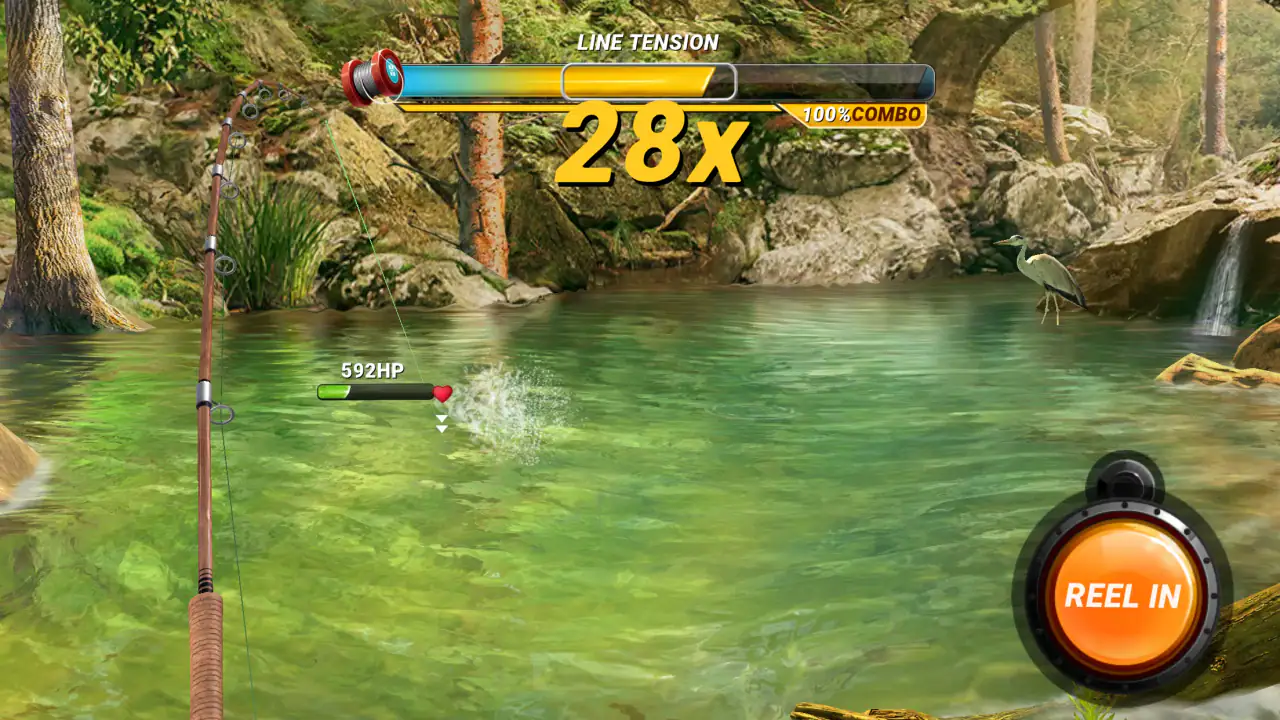
The most useful mindset is to treat each session as a small decision-making exercise. I do not rush through every opportunity. I pay attention to what the current challenge seems to reward, then decide whether it is worth spending more time pursuing a particular result. That approach helps avoid the common mobile-game trap of tapping through everything without understanding why progress has slowed.
Setting boundaries before several people use one device
Fishing Clash is free to download and play, which lowers the barrier for trying it with a household. However, free access does not mean every part of the experience is equally free from spending pressure. In-app purchases range from $0.89 to $99.99 per item, so I would establish a clear rule before letting a child or guest use a device connected to a payment method.
I would also decide whose progress is being used. A single profile can become confusing when two people make different choices, especially if one person is experimenting and another is trying to build a serious long-term run. Even without inventing special account tools, the practical solution is simple: agree on one primary player, or keep turns clearly separated and avoid changing important choices for someone else.
This is one of the less obvious issues with shared mobile games. The problem is not just accidental spending. It is also accidental progress. A well-meaning family member might use resources, change a setup, or enter a competition that another person wanted to approach differently. I recommend treating the game more like a personal hobby than a communal save file unless everyone is comfortable with shared decisions.
For younger players, I would keep the device owner involved when purchases appear. The Everyone content rating makes the game broadly suitable in age terms, but an age label does not explain the difference between a child enjoying the fishing and a child making a purchase. I would let younger users play under an adult’s agreed rules and explain that virtual items still have real-world cost.
Coordinating turns without making the game feel like homework
Coordination works best when it stays lightweight. In my experience, a short turn limit or a simple “finish this attempt, then pass the device” rule is enough. Long negotiations about who owns which fish can drain the fun, while completely unstructured sharing can create arguments when someone changes another player’s progress.
I would separate casual experimentation from competitive sessions. During a trial session, anyone can learn the controls and see whether the fishing feels enjoyable. During a serious session, only the agreed player should make progression decisions. This small distinction prevents a common problem: one person wants to test something, while another assumes every action is part of a carefully planned run.
Another useful habit is to discuss goals rather than scores alone. One player might care about catching a particular type of fish, while another cares about winning multiplayer contests or improving equipment. Asking what the current player is trying to do makes it easier to hand over the device without disrupting the plan. It also reveals whether the game is satisfying different people for different reasons.
I found that the game is most enjoyable when I stop treating every session as a race. The multiplayer structure can encourage comparison, but the simulation side rewards patience. In a household, that gives the game two possible moods: a quiet individual activity or a friendly competition. Both are valid, but mixing them without warning can make a relaxed player feel pressured.
Progression, purchases, and the real cost of convenience
The free-to-play structure is central to deciding whether this game suits you. I can begin without paying, which is useful for testing the controls and deciding whether the fishing loop holds my attention. The optional purchases may provide convenience or help players move through the game more quickly, but that convenience changes the balance between patience and spending.
I recommend playing long enough to understand the normal rhythm before buying anything. Otherwise, it is difficult to know whether a purchase solves a genuine frustration or simply encourages a faster pace. This is especially important on a shared device, where one person may be willing to spend for convenience and another may prefer earning progress through regular play.
My practical rule is to treat purchases as a personal decision, never as part of a group challenge. If two household members compare results, they should agree whether spending is allowed in that comparison. Without that agreement, the competition may measure willingness to pay rather than fishing skill or planning.
The broad audience and free entry make the game easy to recommend for trying, but I would not recommend it blindly to someone who dislikes recurring mobile-game prompts or progression systems. If you want a one-time purchase with a fixed experience, a premium fishing game may be more comfortable. You may lose the ongoing competitive environment, but you also gain clearer boundaries around cost.
Age, trust, and what parents should actually watch
The Everyone rating tells me that the basic theme is suitable for a wide audience, and the fishing concept is less intense than many action games. I would still judge the experience by the child, not only by the label. Some children can enjoy the simulation calmly, while others may become fixated on rankings, rewards, or the next upgrade.
Trust is more useful than constant supervision when the player is old enough to manage the device responsibly. I would explain three things clearly: which account or profile is being used, whether purchases are allowed, and whether the player may alter shared progress. Those rules cover the most likely household conflicts without pretending that the game needs a complicated family system.
For a younger child, I would play the first sessions together. That gives the adult a chance to see how the game presents progression and competition, while the child learns that not every tempting option needs to be selected. It also makes the game a shared activity rather than an unexplained app handed over with no context.
Older players may appreciate the competitive side more, but they still need to understand that multiplayer pressure can affect spending decisions. A teenager who is comfortable with games may know the controls well and still feel pushed to keep up. I would encourage breaks and make it clear that falling behind in a digital competition is not a household emergency.
Where it stands beside other fishing and simulation games
Compared with a simple fishing arcade game, Fishing Clash offers more of a long-term journey. The realistic presentation and multiplayer focus give me reasons to return beyond completing one short level. That makes it more engaging for players who enjoy collecting progress and measuring improvement over time.
Compared with a highly detailed fishing simulator, it is easier to start and better suited to a phone. I do not need a large uninterrupted block of time to enjoy a catch, and a beginner can understand the basic interaction quickly. The compromise is depth: players seeking highly technical equipment management, extensive environmental simulation, or a slow single-player campaign may find the mobile structure less satisfying.
It also differs from a conventional family game. The household value comes from shared interest and turn-taking, not from everyone participating simultaneously. If your priority is laughter around one device with instant rounds, another genre will probably serve you better. If your priority is a hobby that family members can revisit separately and discuss afterward, this game makes more sense.
Three practical ways to get more from each session
First, I avoid spending resources immediately after unlocking something new. I use the next session to understand whether the new option actually improves the way I play. This prevents the excitement of a new catch or upgrade from deciding every later choice.
Second, I keep competitive goals separate from learning sessions. When I am learning a location or mechanic, I focus on consistency rather than chasing the best possible outcome. Once I understand the rhythm, I can approach multiplayer challenges with a clearer plan. This is more efficient than changing strategy after every disappointing catch.
Third, I use shared play to compare decisions, not just results. If two people catch different fish or progress at different speeds, discussing what each person tried can be more useful than declaring a winner. It turns the game into a small strategy conversation and reduces the temptation to copy actions without understanding them.
A fourth tip is to stop while the game still feels enjoyable. Because the progression loop encourages another attempt, it is easy to turn a relaxing break into a long session. I get more value from returning later with a clear goal than from continuing simply because the next reward is close.
Who should play and who should skip it
I think the game is a good match for someone who likes fishing themes, short mobile sessions, and gradual improvement. It is especially appealing if you enjoy having a competitive layer alongside the simulation. The large player community also suggests that the concept has reached a substantial audience: it has passed 100 million installs, and its average rating is 4.7 from around 1.9 million ratings.
Those figures do not guarantee that every player will enjoy the same parts. I would skip it if I strongly dislike free-to-play progression, optional spending, or games that ask me to return regularly. I would also look elsewhere if I want a fully cooperative family experience, a strictly offline fishing trip, or a deep technical simulator with no competitive pressure.
Device compatibility is reasonably broad for an older phone or tablet because the minimum requirement is Android 7.0. The current version is 1.0.446, so I would keep the app updated through the normal store process to receive the intended current experience. On a shared device, I would also make sure there is enough storage and battery for the owner’s other everyday needs before treating the game as a regular household activity.
My household verdict
After spending time with it, I see Fishing Clash as a flexible mobile fishing hobby rather than a simple time-killer. I like how quickly it becomes playable, how the realistic theme gives catches more weight, and how multiplayer competition adds a reason to improve. It can fit naturally into a shared household when everyone understands that turns, progress, and purchases need clear boundaries.
My recommendation is strongest for adults, older children, and families who enjoy comparing progress without turning every result into a serious contest. I would introduce it with a short trial, agree on spending rules, and decide whether the device will have one main player or several clearly separated turns. Those small decisions prevent most of the friction I can imagine in everyday use.
Ten Square Games has made a game that is easy to enter but not entirely shallow. Its free price and Everyone rating make trying it straightforward, while the optional purchases and competitive progression require more awareness than the calm fishing theme initially suggests. The best experience comes from treating it as a shared conversation and personal hobby, not as an unrestricted communal account.
For me, that balance is enough to recommend it. I would download it for a quick fishing session, invite a family member to try a catch, and keep the competition friendly. Just remember that the game is at its most enjoyable when the household agrees on who is playing, what progress means, and when it is time to put the phone down.
FAQs for Fishing Clash: Sport Simulator
What is Fishing Clash: Sport Simulator?
Fishing Clash: Sport Simulator is a mobile game that offers an immersive fishing experience. Players can compete in real-time fishing tournaments, explore various fishing spots worldwide, and collect a variety of fish species. The game emphasizes both competitive and casual gameplay, making it suitable for all fishing enthusiasts.
Is Fishing Clash free to play?
Yes, Fishing Clash is free to download and play. However, it offers in-app purchases that can enhance the gaming experience by providing access to special items, power-ups, and other features. Players can enjoy the game without spending money, but some premium content may require purchases.
What are the system requirements for Fishing Clash?
Fishing Clash is available on both Android and iOS platforms. For Android, the game typically requires at least Android 4.4 and a minimum of 2GB RAM for smooth performance. iOS users should have iOS 10.0 or later. Always ensure your device is updated to the latest OS version for optimal performance.
Can I play Fishing Clash with friends?
Absolutely! Fishing Clash allows you to connect with friends and compete in multiplayer tournaments. You can challenge friends to fishing duels and participate in clan events. The social aspect of the game enhances the competitive spirit and makes it more engaging for players who enjoy multiplayer interactions.
How often is new content added to Fishing Clash?
The developers of Fishing Clash frequently update the game with new content, including special events, tournaments, new fishing locations, and fish species. These updates are designed to keep the gameplay fresh and challenging, encouraging players to return and explore new features regularly.
Pros
- Stunning graphics enhance the fishing experience.
- Wide variety of fish and locations to explore.
- Regular updates keep the game fresh and exciting.
- Engaging tournaments and events for competition.
- User-friendly interface simplifies gameplay.
Cons
- In-app purchases can be quite expensive.
- Requires a stable internet connection.
- Gameplay can feel repetitive over time.
- Some features locked behind paywalls.
- Energy system limits playtime.


